
 Available through SepcoTech
Your vessel is carrying electric vehicles.
Your fire system was not built for them.
A conventional fire system suppresses flames. It cannot stop a lithium battery in thermal runaway — a self-oxygenating process that can reignite for up to 72 hours and requires up to 90,000 litres to control with traditional methods. On a vehicle deck, that water volume creates its own catastrophic risk.
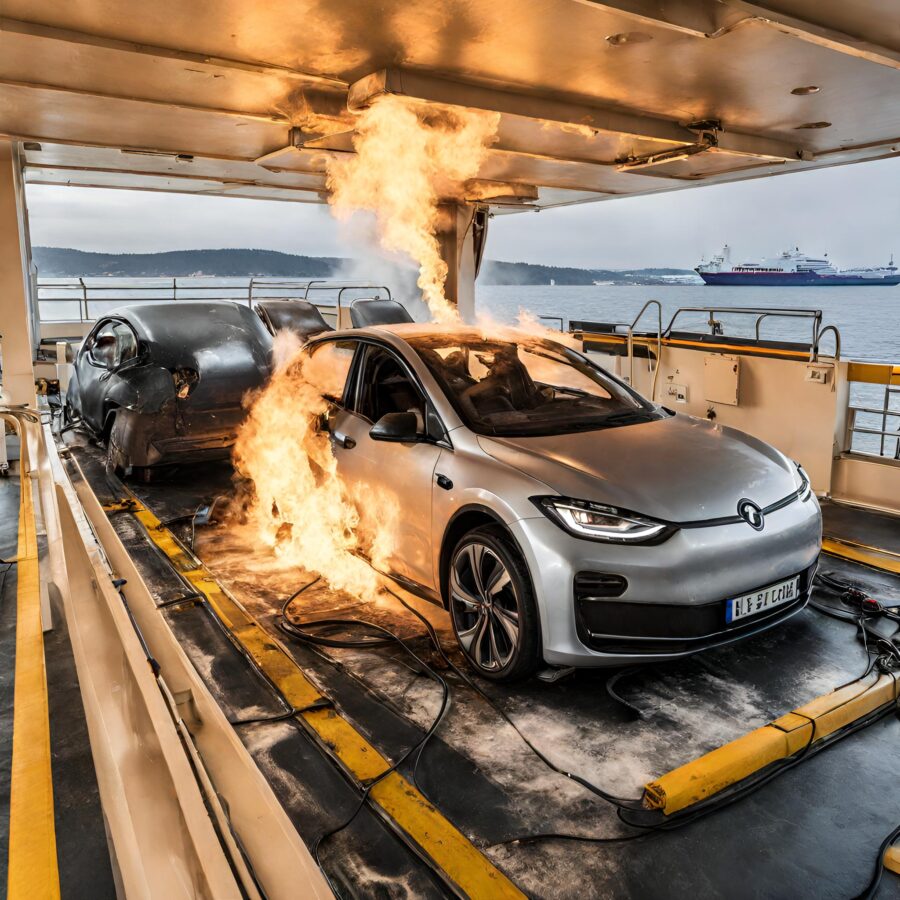
The numbers that define the EV fire problem at sea
These figures come from independent testing and documented incidents — not product claims.
Three reasons EV fires at sea cannot be addressed with conventional equipment
These are not edge cases or worst-case scenarios. They are the normal characteristics of any lithium battery fire — present on every EV that enters a vehicle deck.
Thermal runaway is a chemical process, not a conventional fire
Lithium batteries release their own oxygen during combustion. This makes thermal runaway self-sustaining — it cannot be extinguished by cutting off the oxygen supply. Conventional fire logic does not apply. Suppressing the visible flame does not stop the battery.
The water required for traditional suppression is itself a maritime risk
Up to 90,000 litres of water applied to a vehicle deck reduces tyre-to-deck friction and creates free surface effect — risking cargo shift and vessel stability. On a PCTC, large-scale water application is not a safe response. It is a second emergency.
A suppressed EV fire is not a neutralised EV fire
A battery that appears extinguished can reignite for up to 72 hours. This creates an unresolved liability for every hour the vessel is underway after apparent suppression — and a direct question about what evidence of neutralisation was produced during the response.
M/V Felicity Ace — Mid-Atlantic, 2022
A PCTC carrying 3,965 vehicles including EVs caught fire and sank after burning for days. Combined insurance loss for vessel and cargo exceeded $500 million USD. No conventional suppression system stopped the spread.
Morning Midas — Off Alaska, June 2025
A car carrier with approximately 800 electric vehicles among 3,000 total experienced fire from the EV deck 500 km from shore. 22 crew members evacuated the vessel at sea with no land-based support available.
IUMI Best-Practice Review — September 2025
International marine insurers confirmed explosion risk on RoRo decks from gas accumulation, declared foam systems inadequate, and recommended a "Fixed First" approach — with portable EV-specific suppression as part of the required response capability.
For a maritime EV fire response to be effective,
three criteria must be met
These are not product specifications. They are the operational conditions that determine whether any response — system, procedure, or equipment — can actually work when deployed on a vehicle deck.
It must function within the physical constraints of a vehicle deck
Standard vehicle deck clearance is 20–40 cm between vehicles. Any suppression approach that requires open space is not deployable in the conditions where the fire is most likely to occur. The response must work in the actual space available — not the ideal space.
It must neutralise the battery — not only suppress the visible flame
Suppression is not neutralisation. For the reignition risk to be eliminated, the battery pack must be physically cooled below the thermal runaway threshold and then permanently isolated. Visible flame suppression alone does not achieve this.
It must be deployable by the crew that are actually present
When a vessel is 500 km from the nearest port, the people available are the crew. Two standard crew members, without specialist fire brigade training, within the window before thermal cascade — that is the deployment reality that any response system must be designed for.
The EVstinguish EV-X System
A four-component portable kit independently tested and certified for maritime use. Each component addresses one specific operational constraint — together they meet all three criteria for an effective shipboard EV fire response.
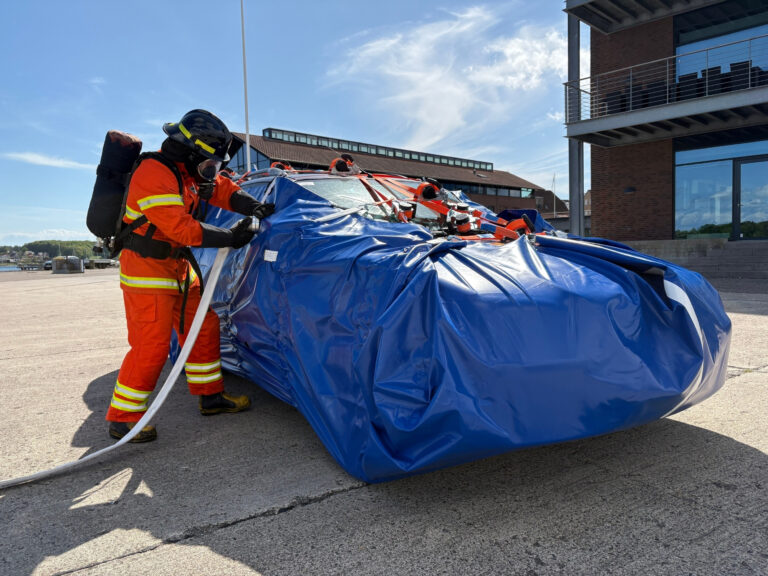
Suppress flames and establish safe approach
The Water Mist Lance delivers precision water mist to knock down open flames, reducing heat and making the vehicle safe for the crew to approach — the prerequisite for all subsequent steps.
Penetrate the battery and stop thermal runaway at source
The lance physically penetrates the battery casing and injects cooling water directly into the cell pack until all surfaces drop below 60°C. This is the only known method to stop thermal runaway from within the battery — not just suppress its visible effects.
Encapsulate, submerge, and permanently eliminate reignition
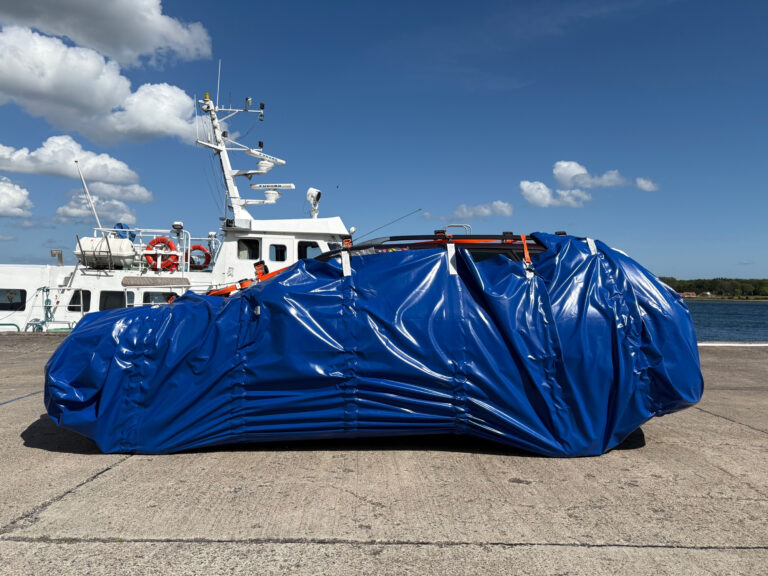
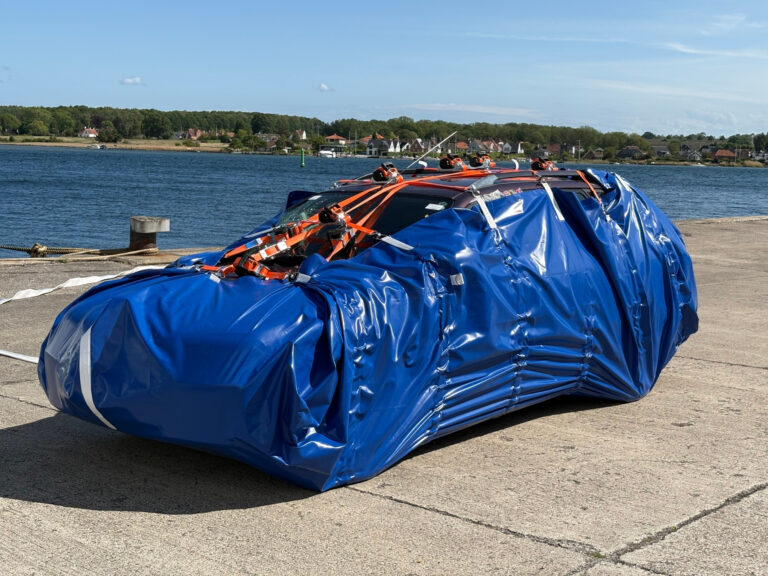
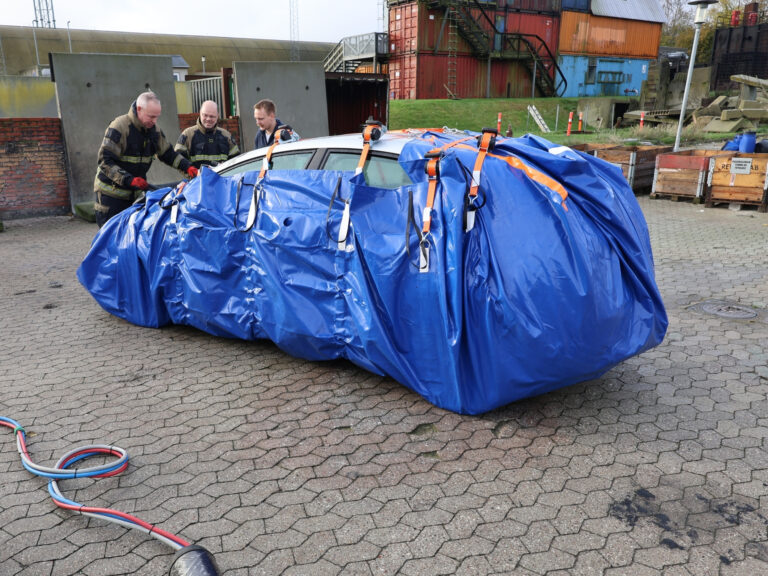
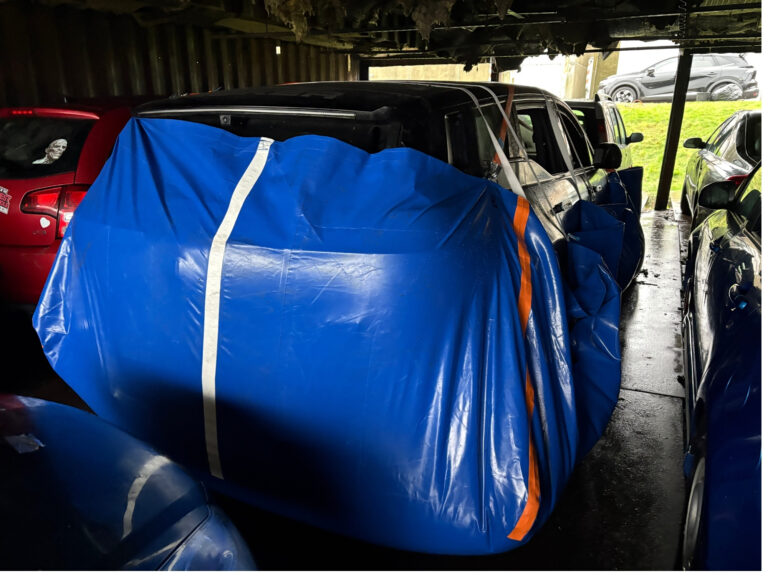
The EV-X Barrier wraps around the entire vehicle and is flooded with 3–4 tonnes of water, fully submerging the battery pack. This permanently eliminates reignition risk — and captures the toxic HF gas emitted during the process, absorbing it in the water volume.
Four components. One complete response.
Each component was designed to address a specific constraint of shipboard EV fire response. Together they form an integrated system — from first flame attack through permanent battery neutralisation.
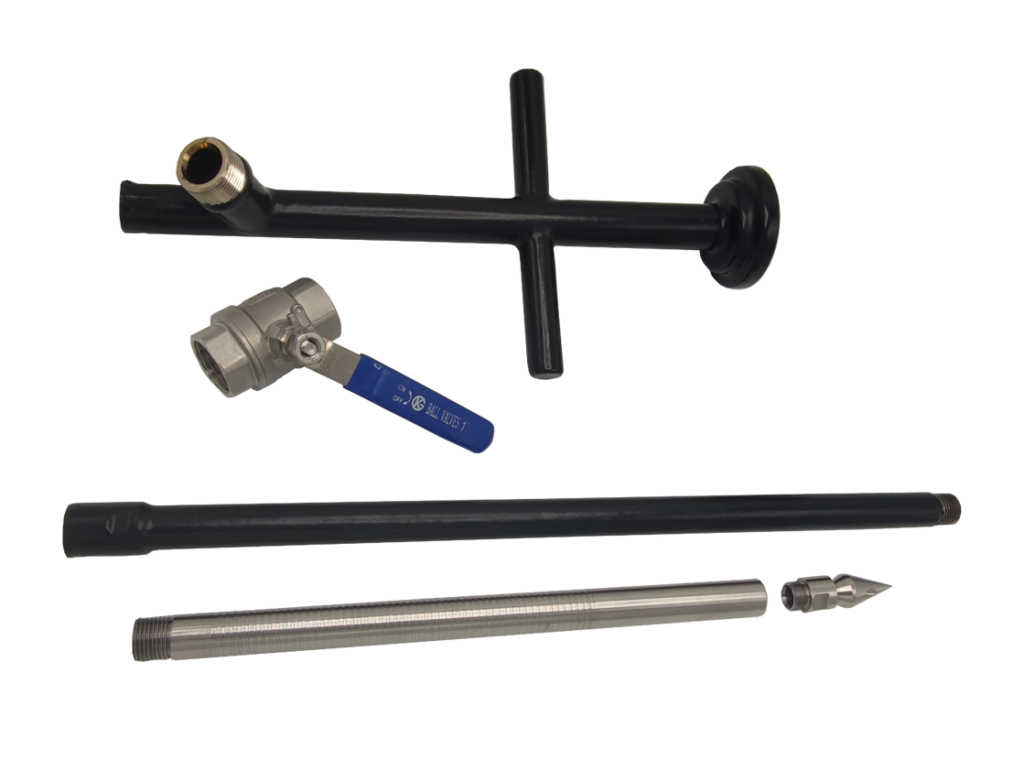
EV Water Mist Lance
Stainless steel multi-tool that suppresses flames with fine water mist, then physically penetrates the battery casing to deliver cooling directly to the cells — the only mechanism capable of stopping thermal runaway at its source. The PE-coated shaft prevents electrical shock during battery penetration.
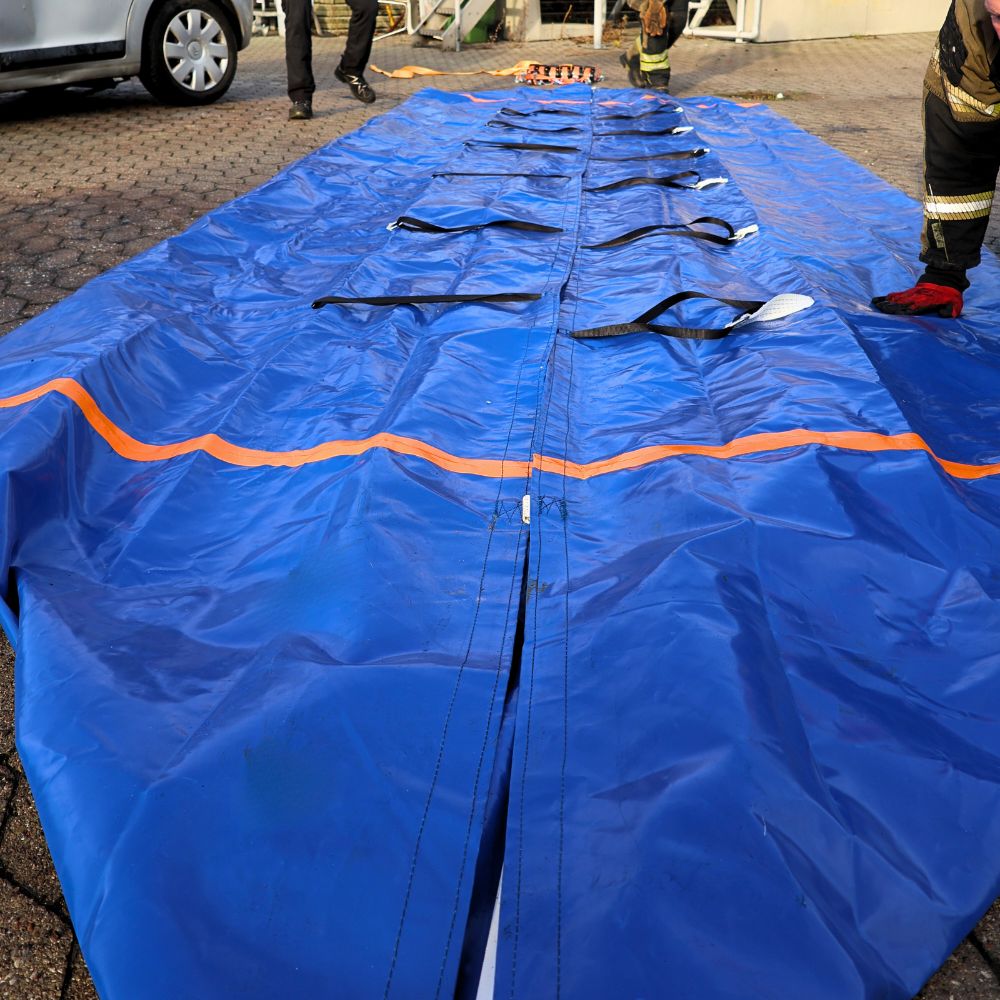
EV-X Submersion Barrier
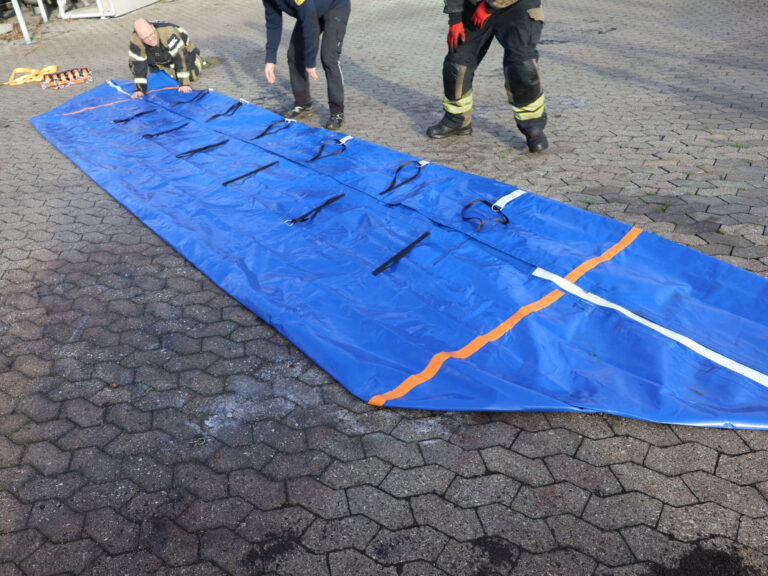
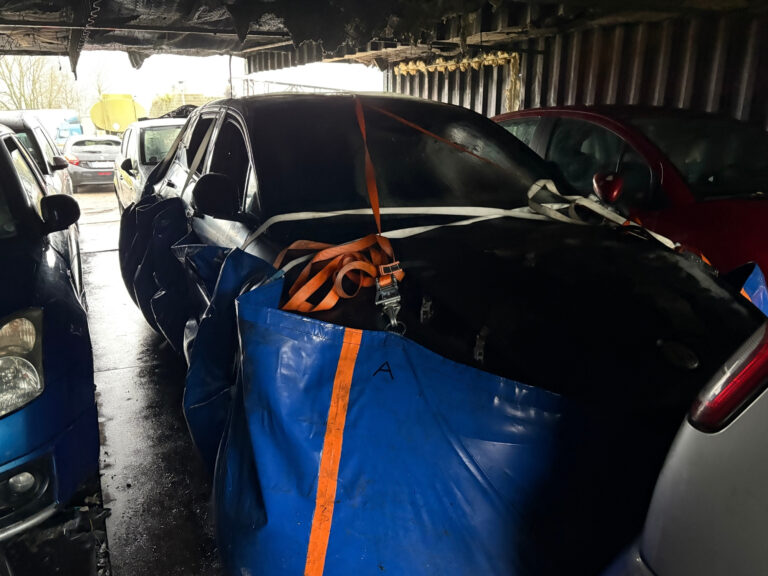
Patent-pending encapsulation barrier designed specifically for tight vehicle deck clearances — tested with as little as 40 cm to the side and 20 cm at the ends. Floods the vehicle with 3–4 tonnes of water to fully submerge the battery. Reusable after deployment. HF gas is absorbed by the water volume during submersion.
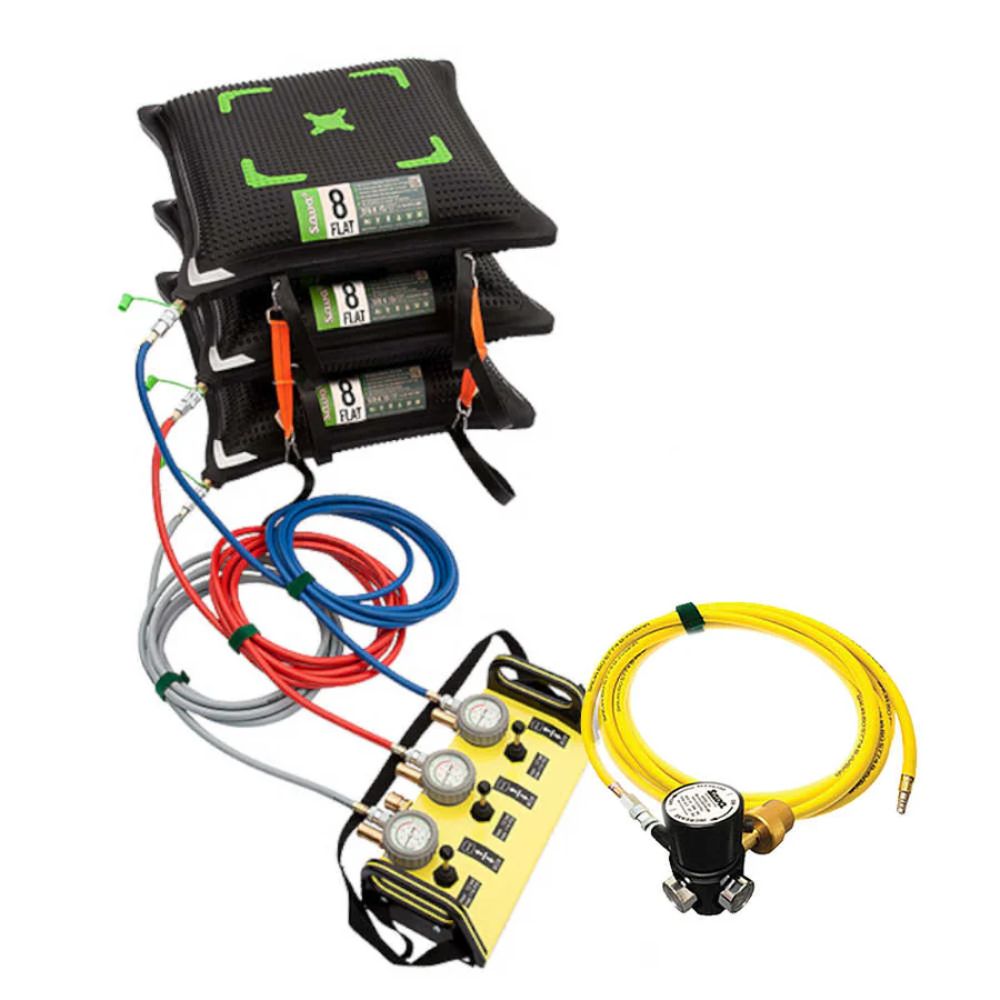
Stackable Pneumatic Lifting Bags
Three pneumatic bags that lift or tilt the vehicle to allow barrier installation even when the vehicle has collapsed onto its axles. The stackable flat design prevents tipping under load. Rated at 13.5 tonnes at 8 BAR and compatible with standard 200 or 300 BAR air cylinders carried on most vessels.
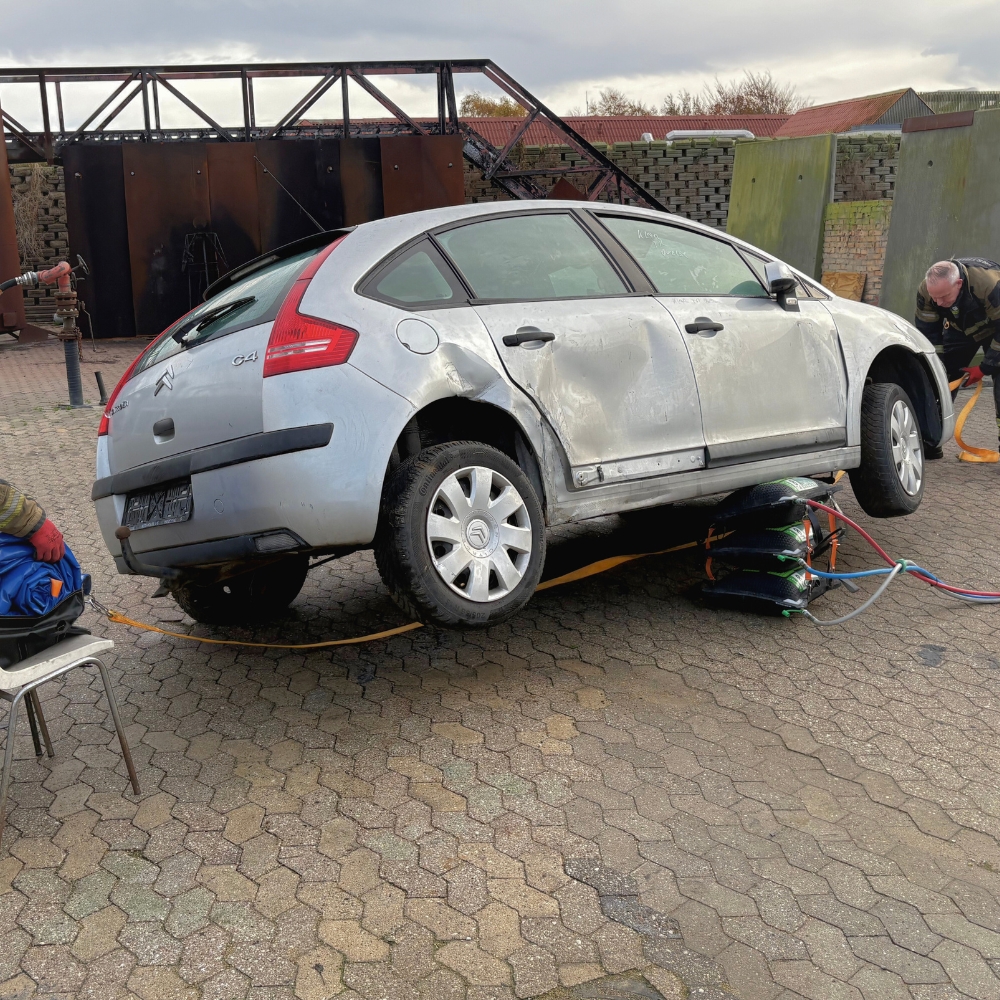
Custom Lashing Straps
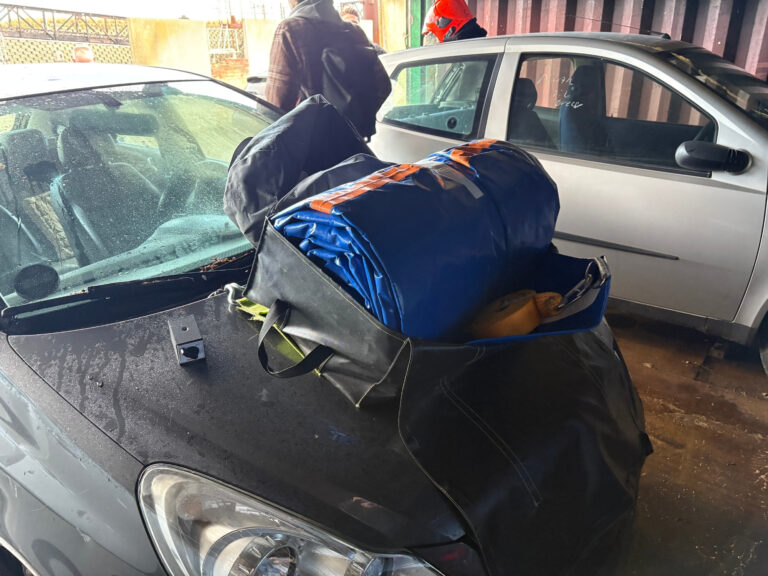
Proprietary high-load ratchet straps engineered for rapid deployment around the barrier perimeter under high-stress conditions. These provide the final seal that holds the water volume in place during full submersion. The full kit — all four components — is narrower than a person when stowed and can be positioned on multiple decks simultaneously.
The system. The tests. The conditions.
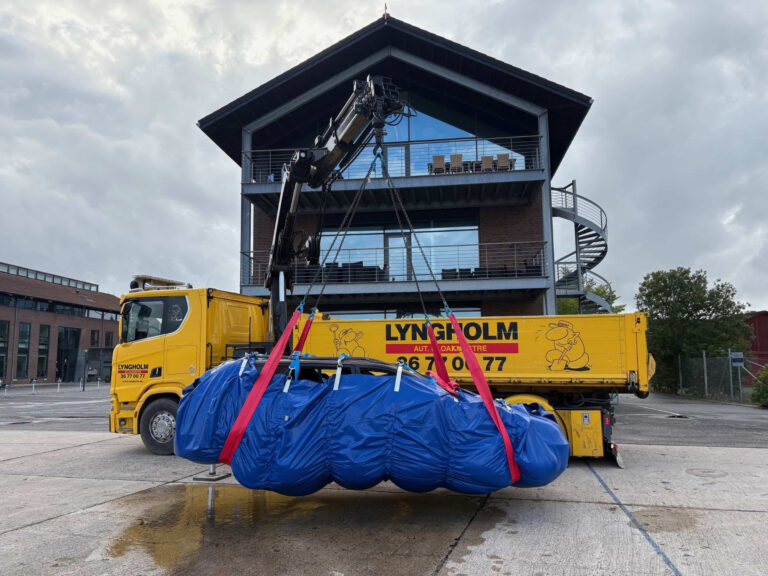
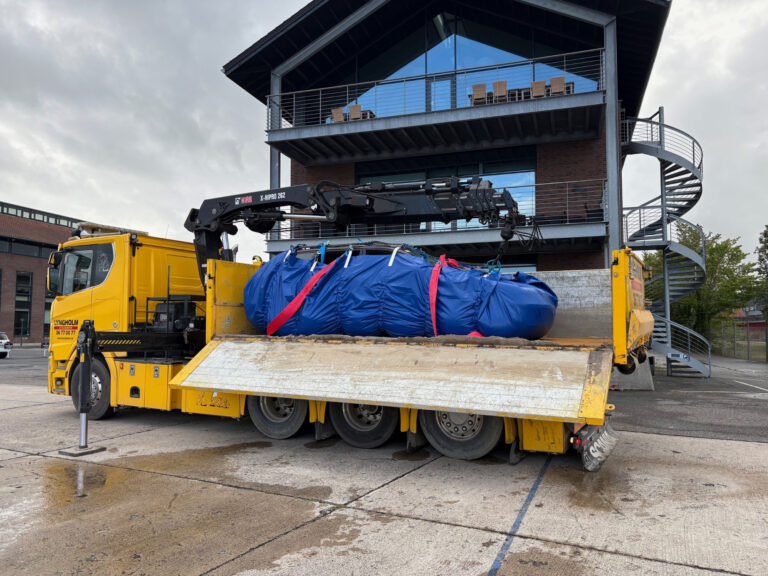
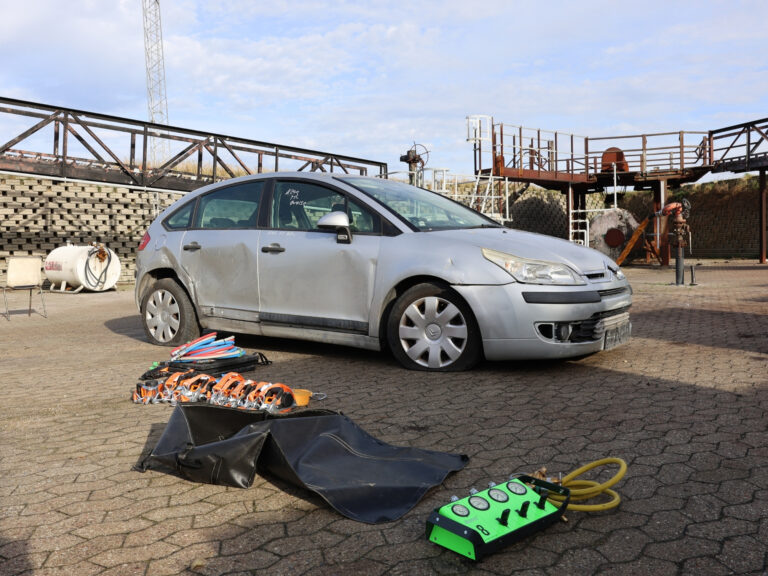
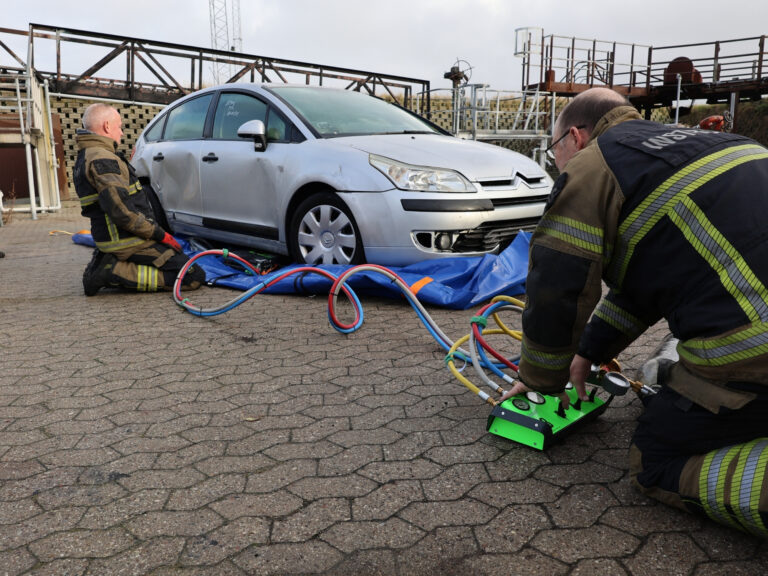
Real photographs from EVstinguish independent testing and live demonstrations — including the DBI-certified test in a simulated ferry environment.
The EV-X was engineered around the specific constraints of each vessel type
The operational risks and physical constraints of an EV fire are different on a ferry, a PCTC, and a RoRo vessel. The EV-X addresses each specifically.
Ferries & RoPax Vessels
Ferries carry mixed vehicles and passengers on the same deck. An EV fire during a crossing puts lives at immediate risk. The primary concern is speed of response and elimination of reignition before passengers disembark and remaining vehicles are driven off.
Car Carriers (PCTC)
PCTCs carry thousands of vehicles on large undivided decks with a critical constraint: water applied to the deck surface reduces tyre-to-deck friction and risks catastrophic cargo shift. The EV-X confines the entire water volume inside the barrier enclosure — no deck flooding.
RoRo Cargo Vessels
RoRo vessels carry commercial EVs, electric trucks, and heavy plant in enclosed tunnels and lower decks where physical access is challenging and fixed systems often cannot reach the battery pack itself. The EV-X goes wherever crew can go.
Performance measured by independent testing
Figures from DBI independent certification testing — not manufacturer claims
| Measure | Conventional Methods | EVstinguish EV-X |
|---|---|---|
| Water Required | Up to 90,000 litres | ~4,000 litres |
| Time to Containment | Up to 24 hours | 2–3 hours |
| Reignition Risk Eliminated | No — battery remains active | Yes — full submersion confirmed |
| HF Gas Neutralised | Not addressed | Water absorption confirmed |
| Deployment Time (2 crew) | Variable / hours | Under 10 minutes |
| Side Clearance Required | Requires significant open space | 40 cm sides / 20 cm ends |
| Cargo Shift Risk on PCTC | High — water distributes across deck | Minimal — fully contained barrier |
| Independent Certification | — | DBI Tested & Certified |
Independent Certification
Independently tested by the Danish Institute of Fire & Security Technology
The EV-X has been tested and certified by DBI — Denmark's leading independent fire safety and security research body, recognised internationally. Testing was conducted in a simulated ferry environment using a real Fisker Ocean EV, with vehicles spaced 20–40 cm apart — replicating worst-case real vehicle deck conditions.
The following results were confirmed by an independent scientific body and are available in the full DBI test report on request through SepcoTech.
Evaluate whether the EV-X is appropriate for your fleet
SepcoTech is the authorised supplier of EVstinguish EV-X systems for the maritime industry. Contact our maritime safety team to assess your vessel types, EV cargo exposure, and current response capability.
Industrivej 51A, DK-4000 Roskilde · CVR DK 38 99 92 14