
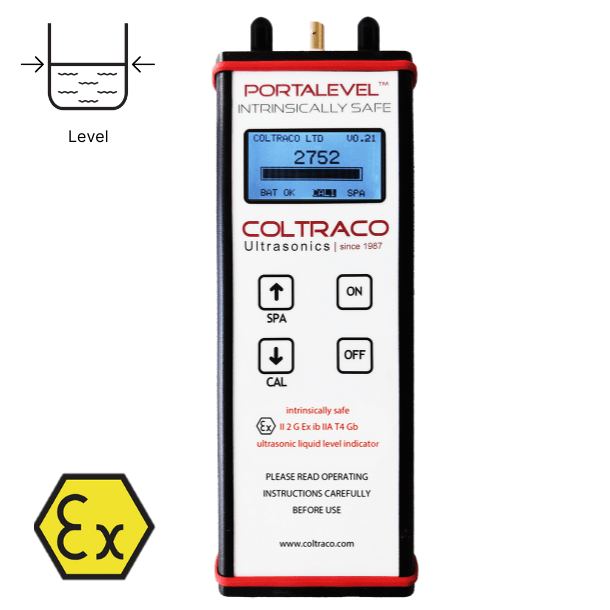
Hazardous Zone Approved Ultrasonic Liquid Level Indicator with Advanced Calibration Features.
The Portalevel® INTRINSICALLY SAFE is an ultrasonic liquid level indicator approved for Zone 1 and Zone 2 ATEX and IECEx hazardous or explosive environments.
Portalevel® IS
Explosion-Safe Ultrasonic Liquid Level Indicator with Enhanced Calibration Capabilities
This intrinsically safe ultrasonic device is designed for measuring liquid levels in pressurized containers and is certified for use in hazardous environments classified as Zone 1 and Zone 2 under ATEX and IECEx standards.
Part Number: 2290334-IS
CAGE Code: KD983 – Manufactured by Coltraco Limited
Zone 1 Certified Ultrasonic Level Indicator
An intrinsically safe ultrasonic device for non-invasive monitoring of fire suppression cylinders in hazardous environments. Approved for ATEX Zone 1 and Zone 2, certified to ATEX II 2 G Ex ib IIA T4 Gb and IECEx (Ex ib IIA T4 Gb) standards.
Compatible with CO₂, FM-200®, NOVEC™ 1230 and similar agents, it eliminates the need for Hot Work Permits—saving time and improving safety versus traditional weighing. Dual certification ensures global compliance.
Key Features:
Accuracy: ±1.5 mm
Advanced calibration with 3 modes (including iCal)
4 power settings for varied cylinder types
Certified standards:
ATEX: EN IEC 60079-0:2018, IEC 60079-11:2023
IECEx: IEC 60079-0:2017, IEC 60079-11:2023
Applications:
LNG/LPG carriers
Oil tankers
Offshore platforms
Chemical and gas plants
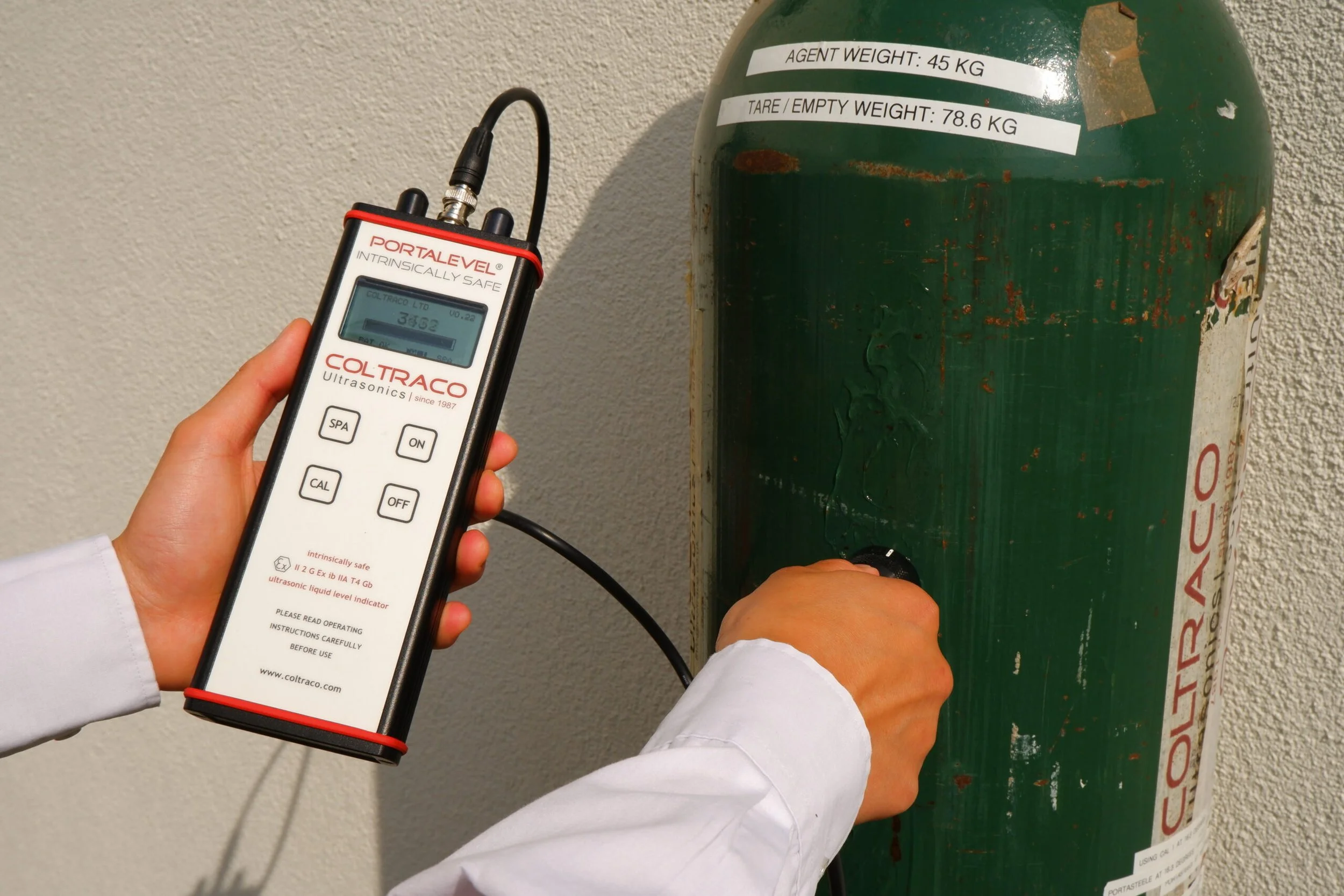
Technical specifications
Dimensions 215 mmxx 82 mm x 30 mm
Weight: 480 g
Sensor
Head Diameter: 34 mm
Mounted in magnetic applicator
Connection: BNC with 1 m coaxial cable
Measurement Accuracy ±1.5 mm (or ±1/16 inch) from the actual liquid level
Power Supply
4 x AA Energizer L91 batteries (ATEX-approved)
Two sets included with the unit
Only these batteries maintain ATEX compliance
Display Digital readout integrated into handheld unit
ATEX Certification II 2 G Ex ib IIA T4 Gb
Operating Temperature Range –20°C to +40°C (–4°F to +104°F)
What’s Included
Handheld Main Unit: Portable, battery-powered device with a digital display for liquid level readings. Certified for use in ATEX hazardous zones.
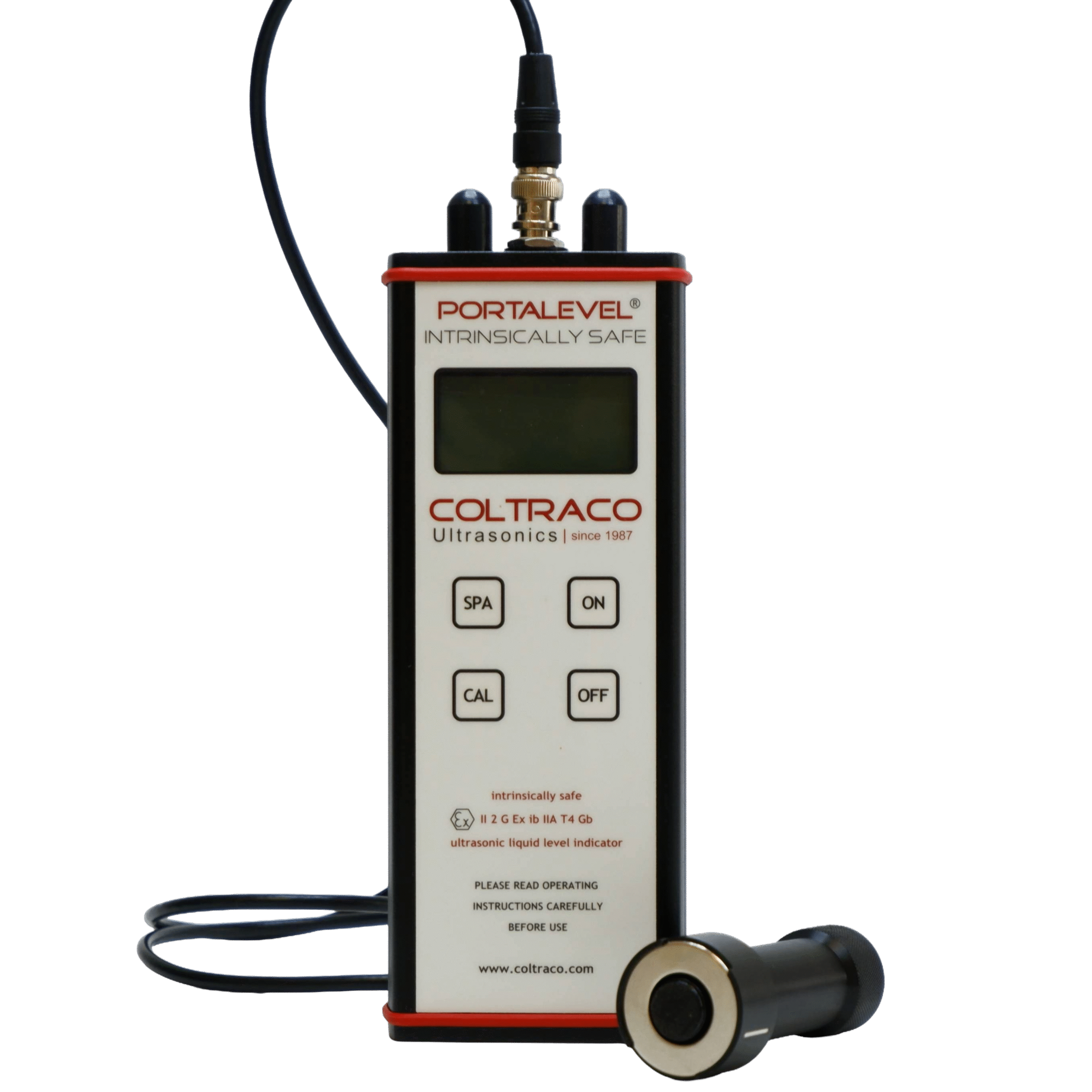
Ultrasonic Sensor with Magnetic Holder: Designed for non-invasive measurements, equipped with a magnetic applicator for secure placement. Approved for ATEX environments.
Ultrasonic Coupling Gel (125 ml): Ensures optimal contact between the sensor and cylinder wall for accurate ultrasound transmission.
8 x AA Batteries (Ex-rated): High-performance batteries suitable for intrinsically safe applications.
Infrared Thermometer: Used to measure cylinder temperature. Note: This accessory is not intrinsically safe.
Operating Manual: Provides detailed instructions on device functionality and usage.
Calibration Certificate: Confirms the unit has been tested and verified for accuracy prior to shipment.
Durable Carry Case: Protects equipment and allows easy transport.
Frequently Asked Questions
-
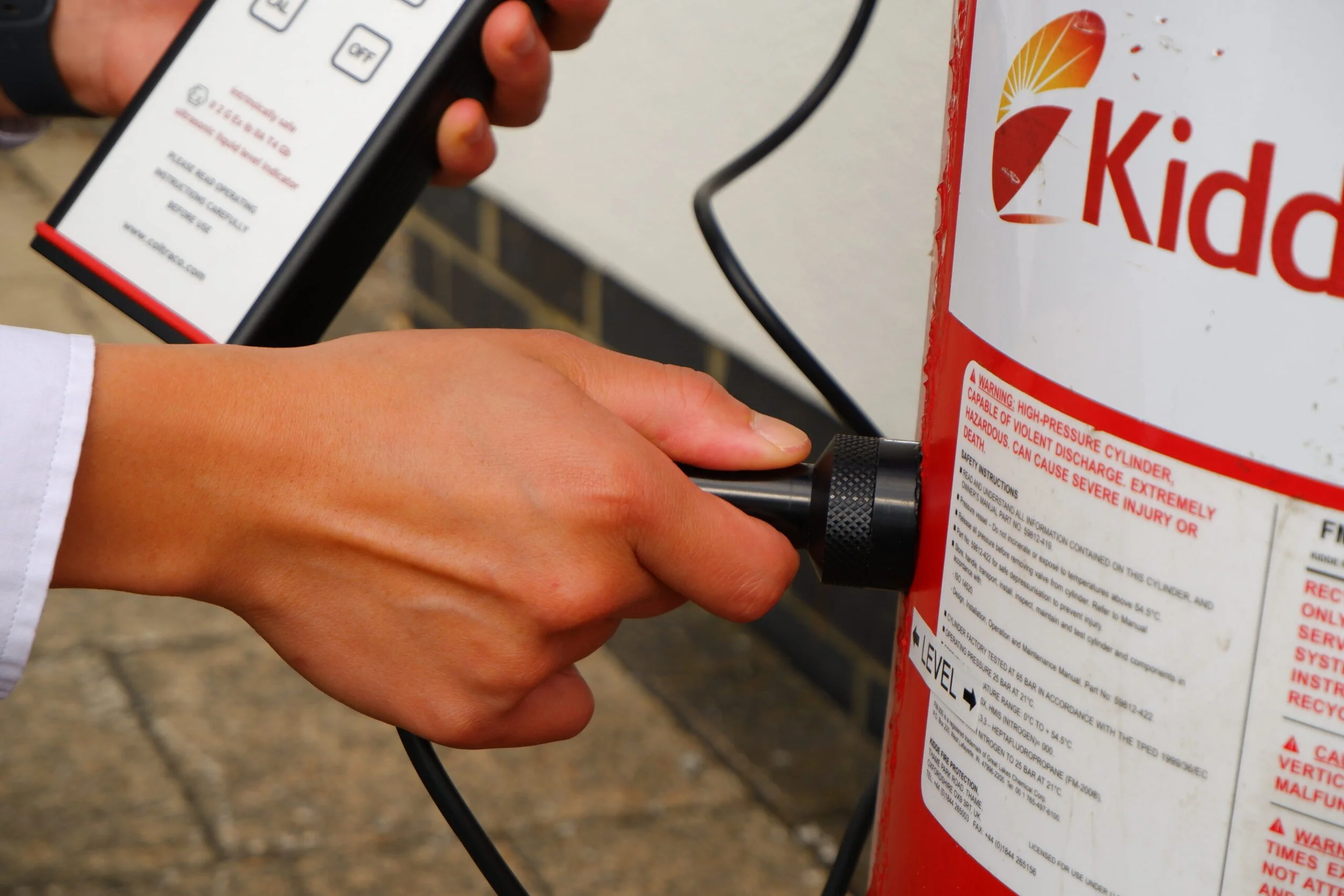
Using water or an ultrasonic coupling gel is a necessary part of operating a Portalevel® unit. The sensor works by transmitting a high‑energy ultrasonic pulse that must pass through the cylinder wall before returning to the sensor as an echo.
If there is any air gap between the sensor and the cylinder surface, the ultrasonic signal will be reflected away at the surface and will not penetrate the material. This prevents the returning echoes from being detected and can result in inaccurate or failed measurements.
Applying a thin layer of coupling gel or a small amount of water removes these air gaps and creates effective acoustic contact between the sensor and the cylinder. This ensures consistent signal transmission and reliable coupling throughout the measurement process.
-
SPA stands for Special Power Application. It is a feature designed to assist with measurements in difficult conditions where standard ultrasonic settings may not provide a strong enough signal.
Certain cylinders—especially those that are large, heavily corroded, or affected by surface degradation—can interfere with ultrasonic signal transmission even when correct coupling has been achieved. Similar challenges may arise if the liquid inside the cylinder significantly absorbs or weakens the ultrasound, causing the returning echo to be too faint for reliable detection.
In such cases, activating the SPA mode increases the ultrasonic output power of the Portalevel®. This enhanced signal strength improves echo detection, allowing accurate measurements to be taken in situations where normal operating power may be insufficient.
-
The numerical display on the Portalevel® INTRINSICALLY SAFE shows the strength of the ultrasonic echoes returning to the sensor. Stronger echoes appear as higher readings on the display.
During use, the instrument is calibrated in an area where the signal strength is high, causing the on‑screen bar graph to fully fill. Once calibrated, the operator slowly moves the sensor toward areas where the signal becomes weaker. As the echo strength decreases, the bar graph reduces and eventually disappears.
The point at which the bar graph is no longer visible corresponds to the change in ultrasonic response, indicating the position of the liquid level inside the cylinder.
-
For some liquids under pressure, accurate liquid level measurement is only possible when the temperature remains below a specific limit known as the critical temperature. Above this temperature—provided the pressure is also sufficiently high—the substance no longer behaves as a conventional liquid. Instead, it enters a supercritical state, where the distinction between liquid and gas disappears.
When a fluid is in this supercritical condition, there is no clearly defined liquid surface. As a result, it becomes impossible to identify a liquid level using ultrasonic measurement techniques.
In most cases, this limitation is not an issue because many industrial liquids have critical temperatures well above normal operating ranges. For example, NOVEC™ 1230 has a critical temperature exceeding 150 °C.
CO₂ and FE‑13™, however, are exceptions. Their critical temperatures are relatively low—approximately 31 °C for CO₂ and 26 °C for FE‑13™. If either agent is stored in a cylinder at temperatures above these thresholds, the contents may enter a supercritical state, preventing successful liquid level measurement.
To carry out a valid test, the cylinder temperature must be reduced below the relevant critical temperature. This can be achieved using methods such as air‑conditioning, running cool water over the cylinder, or applying ice packs around the exterior until the temperature is sufficiently lowered.
Related Products
-
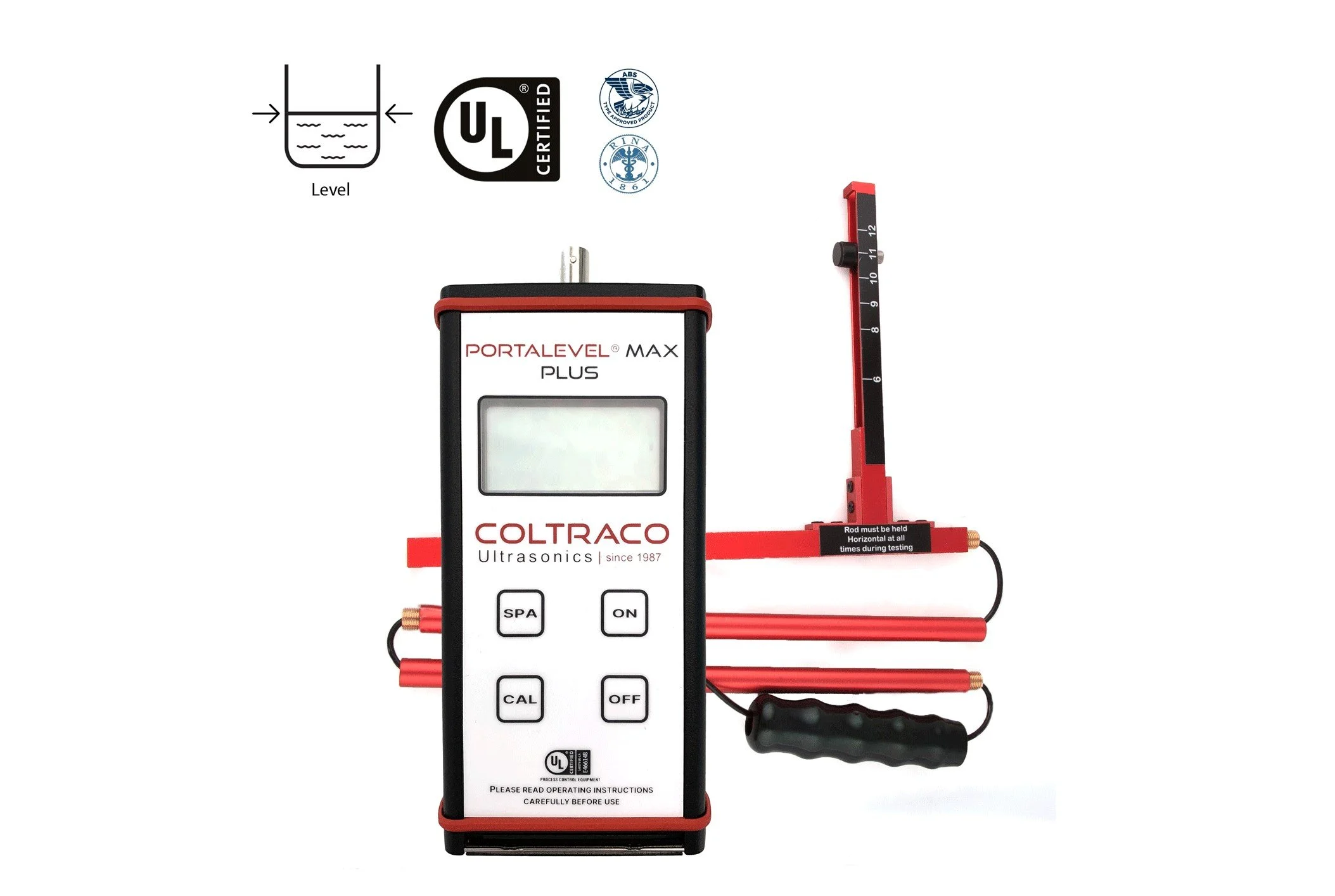
MAX MARINE PLUS
12mm slimline extension rod sensor.
Choose for LIQUID/GAS readings
Choose for UL, RINA and ABS Type Approval.
Choose for cylinders up to 400mm in diameter.
-
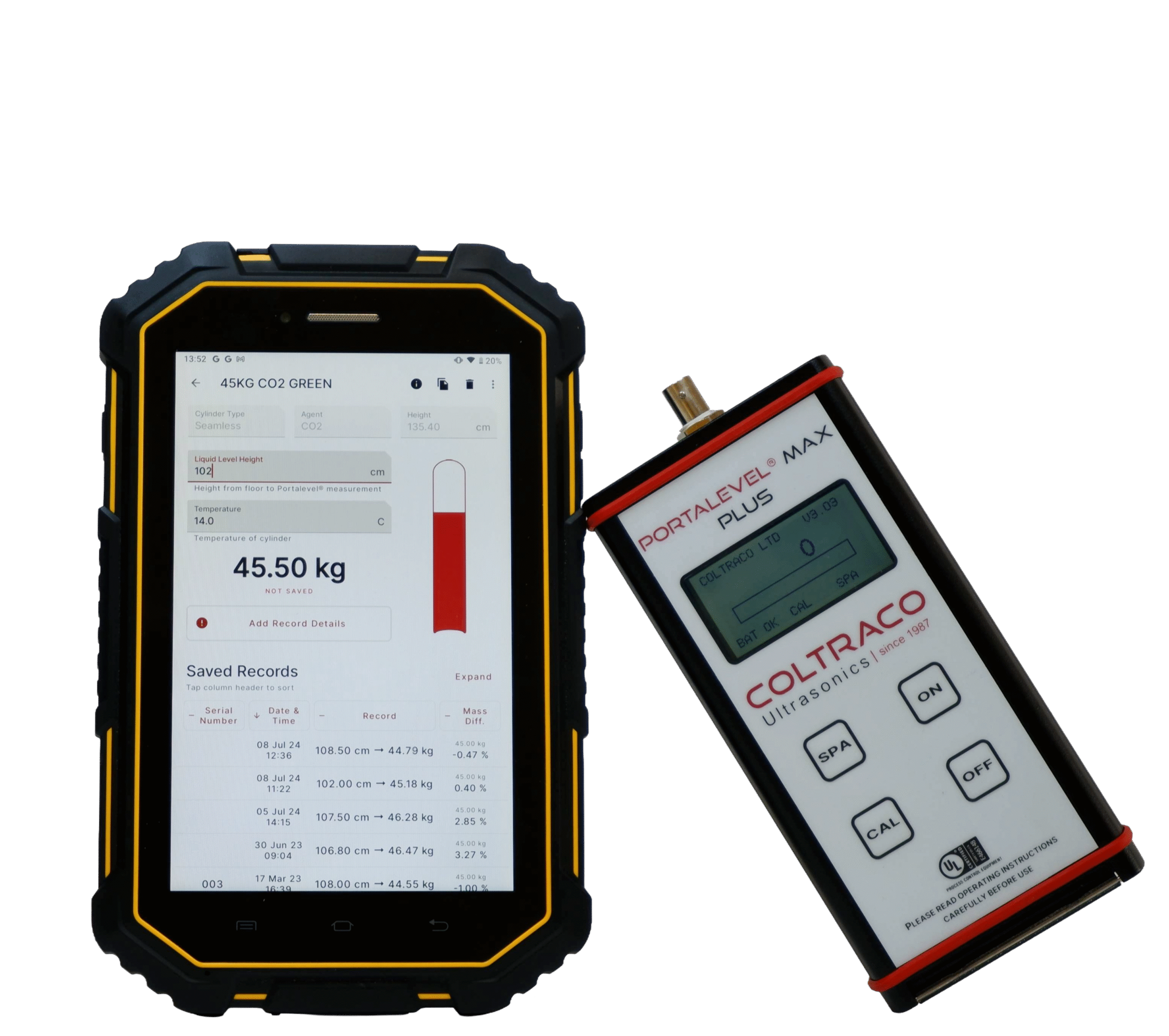
Portasteele® CALCULATOR
Choose for weight conversion measurements
Export inspection results for enhanced customer service reports and internal records.
Choose as a companion tool to the Portalevel range
-
Portamarine®
20mm standard extension rod sensor
Choose for cylinders up to 320mm in diameter
Choose for RINA Approved, IMO
SOLAS FSS compliant